Bridging Clinical Care and Health Technology
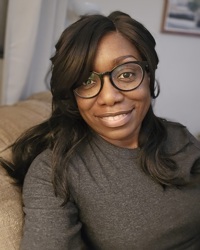
Tori Mahar
Nurse Informaticist, Veterans Affairs Puget Sound Health Care System
Tori Mahar’s career has taken her from combat medicine and laboratory science to pathology and health IT. It was while serving as a laboratory medical director and chief of virtual health that she discovered a passion for clinical informatics. “I quickly realized I needed formal training to effectively bridge the gap between clinical medicine and enterprise technology,” Tori said.
That realization led her to a clinical informatics fellowship at Madigan Army Medical Center and the University of Washington’s Online Master of Science in Clinical Informatics & Patient-Centered Technologies (CIPCT). At UW, she found the combination of technical, leadership and change management training she was looking for. “Driving large-scale modernization isn’t just about the technology — it’s fundamentally about people,” she said.
Today, Tori serves as chief medical information officer and chief of clinical informatics at Madigan, where she puts those skills to work at the intersection of health care and technology.
Tell us a little about your current role at Madigan Army Medical Center.
Currently, I serve as the chief medical information officer and chief of clinical informatics at Madigan Army Medical Center. I also serve as the informatics lead for Medical Readiness Command, Pacific, and the solution owner for the Defense Health Agency’s deployment of PathNet Anatomic Pathology.
My day-to-day focus is on the strategic integration of MHS GENESIS, our electronic health record, with Army readiness and healthcare delivery. The digital infrastructure we build directly affects patient safety, diagnostic turnaround times and the readiness of the U.S. Armed Forces.
I love what I do because I get to solve massive, complex puzzles. But the real reward is knowing that when we optimize a workflow or successfully deploy a new module, we’re removing a roadblock for clinicians and helping improve care for service members and their families.
How did your career path lead you to clinical informatics?
My path has been a bit unconventional, but I wouldn't trade a single step of it. I started in the Army in 1996 as a combat medic, then became a medical laboratory technician before going to medical school to become a pathologist.
Later, while serving as a laboratory medical director and chief of virtual health, I discovered my passion for health IT. I realized I needed formal training to effectively bridge the gap between clinical medicine and enterprise technology. That led me to the ACGME Clinical Informatics Fellowship at Madigan Army Medical Center and, ultimately, the UW CIPCT program.
Why was the Online Master of Science in Clinical Informatics & Patient-Centered Technologies (CIPCT) degree the right program for you?
During my fellowship at Madigan Army Medical Center, our cohort had the option to pursue our master's coursework through the UW or another university. I ultimately chose UW because I realized that driving large-scale modernization isn't just about the technology — it's fundamentally about people.
I needed more than just technical skills. I also needed to understand leadership and change management, especially the cultural and workflow changes that come with large-scale health IT projects. The CIPCT program gave me that combination.
The program's flexibility was also a lifesaver. It allowed me to balance my coursework with my fellowship and duties as a staff pathologist.
How do you use what you learned in the CIPCT program in your work today?
I use the systems-thinking and workflow analysis skills I developed at UW every single day. One example is the Military Health System transition to PathNet AP, a new information system for anatomic pathology. As the solution owner, I get to play the role of translator — I use my CIPCT education to speak the "tech language" to developers and vendors, then translate those technical capabilities into safe, actionable workflows for clinicians.
A standout moment from my learning experience was designing a multisite pilot study for digital pathology consultations. I took the framework I developed through my UW coursework and applied it to a real problem: the delays involved in mailing physical glass slides.
That academic project became a live enterprise telepathology pilot spanning from Asia to Europe. Seeing something I developed through my coursework put into practice on that scale has been incredibly rewarding.
How did your military experience add to what you learned in the CIPCT degree program?
With over 20 years in the Army — from a lab technician to a physician leader — I've seen firsthand how systems affect patients. Working in such a large, high-stakes environment gave me an immediate way to put what I was learning in the CIPCT program into practice.
When we discussed patient-centered technologies in class, for example, I immediately applied those concepts to figure out how we ensure our service members receive uninterrupted, high-quality care across a global footprint.
What advice would you give to someone who’s considering this program?
My biggest piece of advice is to use your current work environment as your laboratory. If you encounter a broken workflow or a technological bottleneck in your clinic, use your CIPCT coursework to design a solution for it.
Don’t let the scale of a problem intimidate you. Whether it’s a scheduling issue in a single clinic or a global enterprise deployment, this program gives you the tools to break down those barriers.
Trust your clinical expertise, lean heavily into the program's leadership training and embrace being that vital bridge between your IT department and your clinical colleagues.
Interested in learning more about the UW Online Master of Science in Clinical Informatics & Patient-Centered Technologies? Join an upcoming info session or visit our Admissions page to learn more about the program and how to apply.
This Q&A has been edited and condensed for clarity. Interview by Mary Newhoff; editing contributions by Liliana Mar.
The views expressed in this interview are those of Tori Mahar and do not reflect the official policy or position of Madigan Army Medical Center, the Department of the Army, the Defense Health Agency, the Department of War or the U.S. Government.