Rolling Out the Future of Health Care Informatics
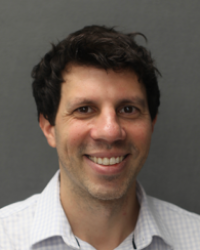
Alex Stabile
Consulting EHR Support Analyst, HCA Healthcare
As an occupational therapist, Alex Stabile helped people recover from illness or injury so they could return to their everyday activities. Inspired by a chance to serve clients in new ways through telehealth, Alex decided to pursue the Master of Science in Clinical Informatics & Patient-Centered Technologies (CIPCT) at the University of Washington.
“I entered this degree program as an occupational therapist with little experience in health care IT,” says Alex, who graduated in 2021. “The CIPCT coursework provided me with knowledge and skills that I needed to make the jump into a new career.”
We asked Alex how his UW experience led to his new role in health care informatics, what he’s looking forward to next, and why he recommends maximizing every opportunity in the CIPCT degree program.
What’s your role in working with electronic health records at HCA Healthcare?
As an electronic health record (EHR) analyst for the Kansas City division, I maintain, update and build orders, interventions and charges. I also meet with nurses, providers and stakeholders across quality assurance, billing and hospital leadership to design, review, test and update our system. We’ll be implementing a new EHR soon, and I’m excited to be a part of that rollout.
What inspired your pivot to the informatics side of the health care industry?
The CIPCT program really guided me into this career path. Before taking on this role, I was an occupational therapist for about 13 years. I was always interested in information technology, and as I began working with EHRs, I got curious about how clinical workflow is considered during the design process.
I was invited to consult with a startup effort that was designing a mobile app for telehealth occupational therapy services, and that motivated me to pursue a degree in clinical informatics. The UW’s online CIPCT program seemed like the perfect fit.
Why was the UW Online Master of Science in Clinical Informatics & Patient-Centered Technologies degree the right program for you?
The flexible, hybrid schedule allowed me to work full-time while completing my degree. I wasn't quite sure what direction I wanted to take my career at that time, and the CIPCT program’s highly skilled faculty members each specialize in different areas. It was also important to me to have some face-to-face interaction with faculty and other students. My professors were very approachable and the group projects gave me opportunities to get to know all my classmates.
What did you take away from your research experience in the CIPCT program?
My scholarly project research project opened doors for me. I worked with Professor Sarah Iribarren to conduct usability testing of a mobile app to support individuals with tuberculosis. Our findings helped improve the app’s overall design and functionality. I was asked to present the research at an American Medical Informatics Association conference, where I met health informaticists from across the country. This research was also published in the journal Informatics for Health & Social Care, which led to additional networking opportunities.
How do you use the knowledge and skills you gained in this UW program in your everyday work?
The hands-on learning and group projects gave me the tools needed to excel in my current role. For example, the coursework on process improvement, project management for health informatics and using Excel and SQL has been extremely helpful in my day-to-day operations, from building orders and reports to leading projects. At first, I didn't really think project management would be such an important skill, but it’s something I use almost every day.
Because of this program, I also feel better prepared to tackle the steps necessary to successfully complete an EHR implementation. We completed EHR case studies, held class discussions, and reviewed educational materials on what works — and what doesn't. Recently, I traveled to one of our other divisions to provide elbow support as they launched a new system, and because of what I Iearned in the CIPCT program, I was prepared to work with end users and I knew what to expect leading up to, during and after go live.
What advice would you have for others considering this program?
There are so many directions you can follow with this degree. Take advantage of the experienced faculty at the UW, and try to stay in touch with your classmates after graduation. The UW staff are there to help guide and facilitate your learning and career aspirations. If you have the chance, also take advantage of professional conferences — they provide a great opportunity for networking and professional development.
— Thanks to Alex for this conversation! Answers have been edited and condensed for clarity.